ROSS BLECKNER, Birds & Brain & Flowers – Jablonka Pasquer Projects

BIRDS & BRAIN & FLOWERS
JABLONKA PASQUER PROJECTS
Ross Bleckner

September 8th – November 3rd, 2012
| DE

Die Jablonka Galerie und Jablonka Pasquer Projects freuen sich, neue Arbeiten des amerikanischen Künstlers Ross Bleckner zu präsentieren.

Der 1949 in New York City geborene Maler Ross Bleckner wird als einer der Protagonisten der Op‐Art gesehen – eine Stilrichtung der bildenden Kunst, die sich in den 1960er Jahren entwickelte und mit der optischen Täuschung des Betrachters spielt.

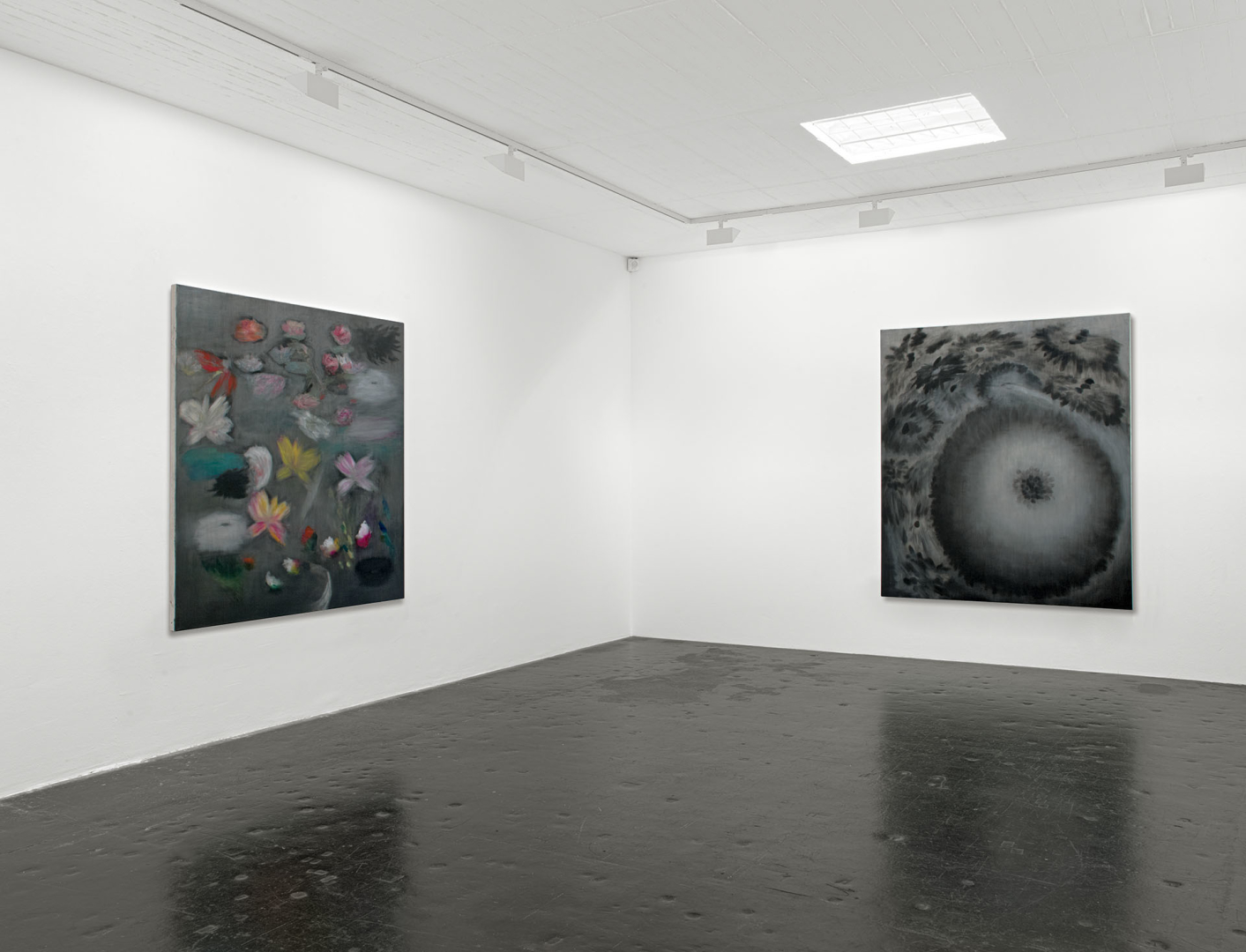
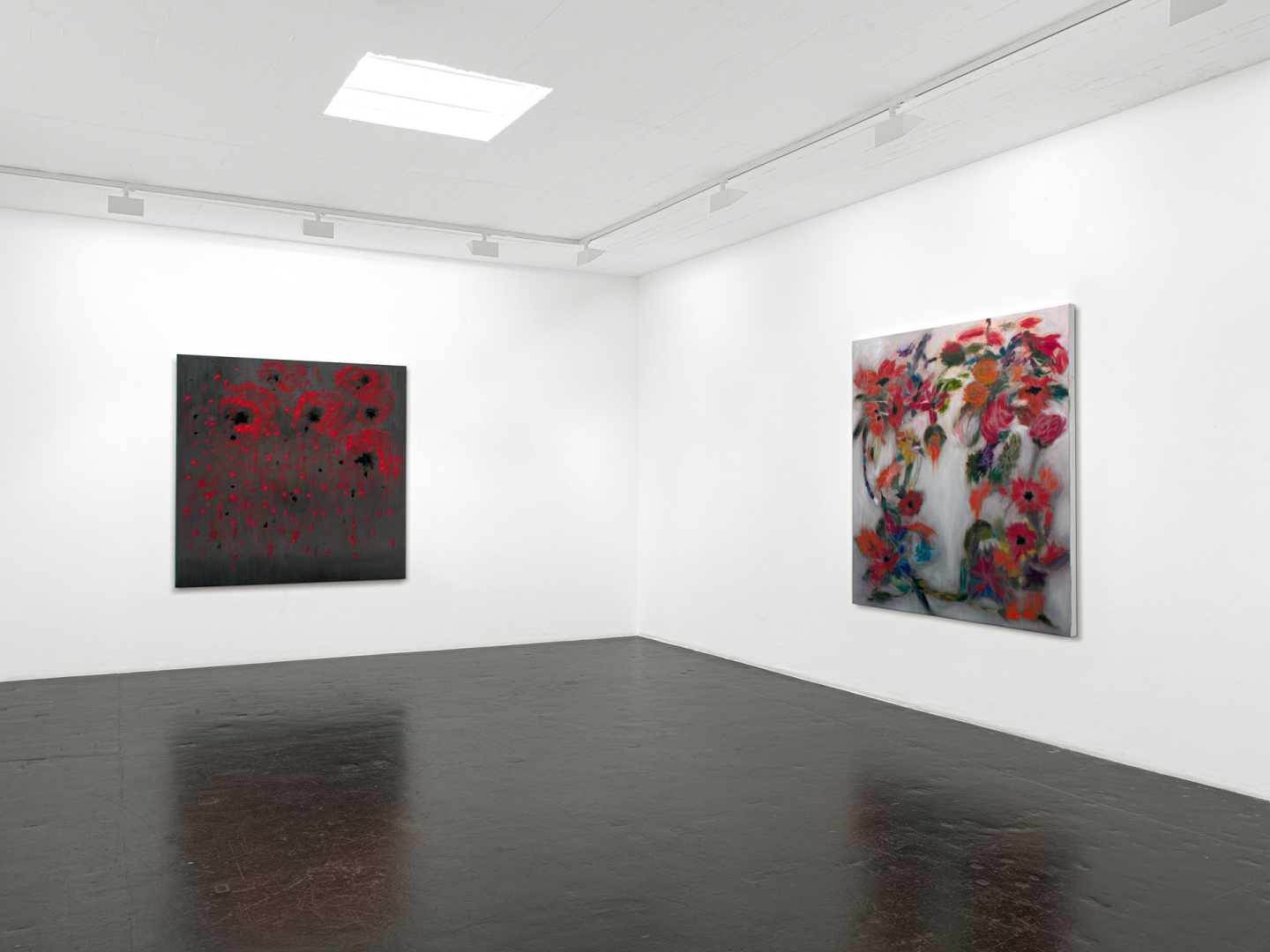
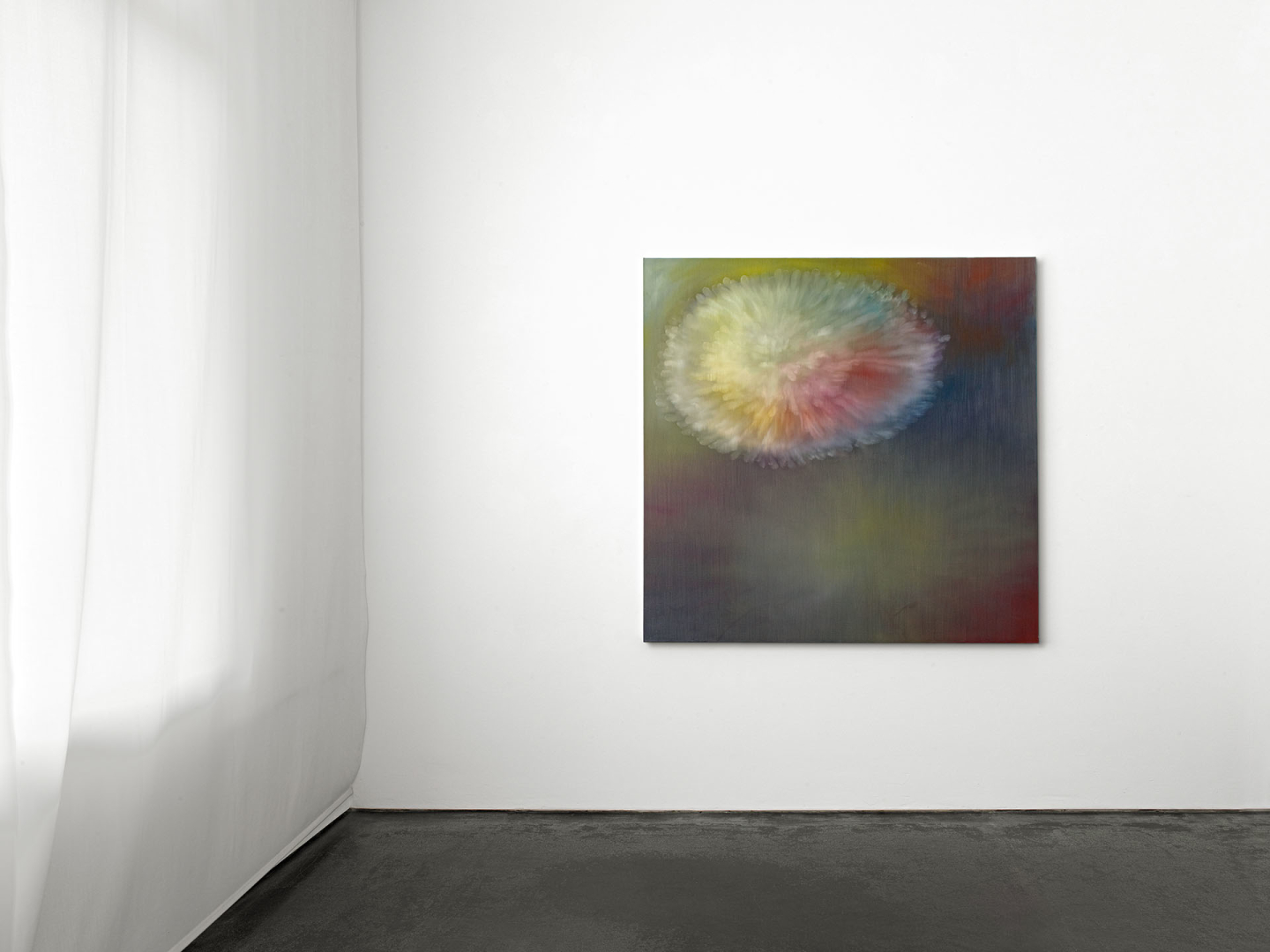
Seine aktuellen in der Jablonka Galerie und bei Jablonka Pasquer Projects gezeigten Werke, zeugen von Bleckners Interesse an Unschärfe, an Desillusion, daran, Dinge zu vermischen, um deren Identität nicht vorhersehbar, entschlüsselbar zu machen.

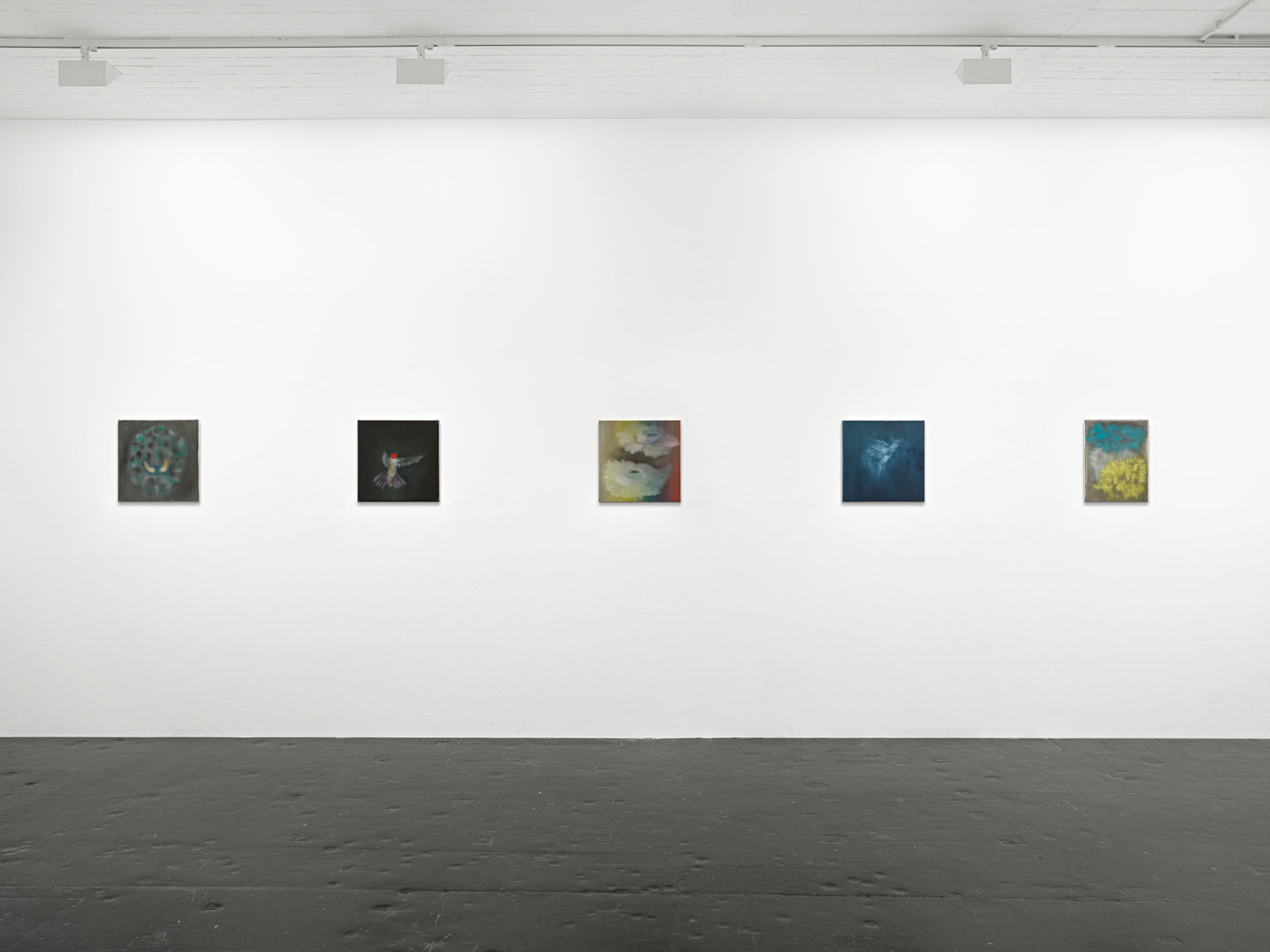
Verdeutlicht wird dies beispielsweise durch die Darstellung einer Taube, die konturenlos durch das Dunkel der Nacht gleitet. Sie gehört zu den „Birds“ und „Flowers“ Arbeiten, die in der Jablonka Galerie ausgestellt sind.

Sein großes Interesse an Hell und Dunkel, am Wechselspiel zwischen Licht und Schatten begründet der Künstler sowohl technisch als auch metaphorisch: „I’d rather bring dark out of light than layer dark over night. It’s just my optimism, not infantile, but the childlike part of my brain that wants to make things better, make things works. There’s light at the end.“

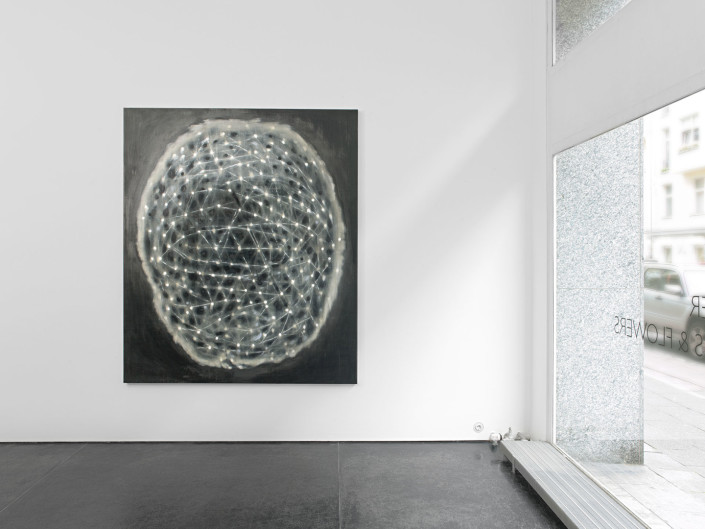
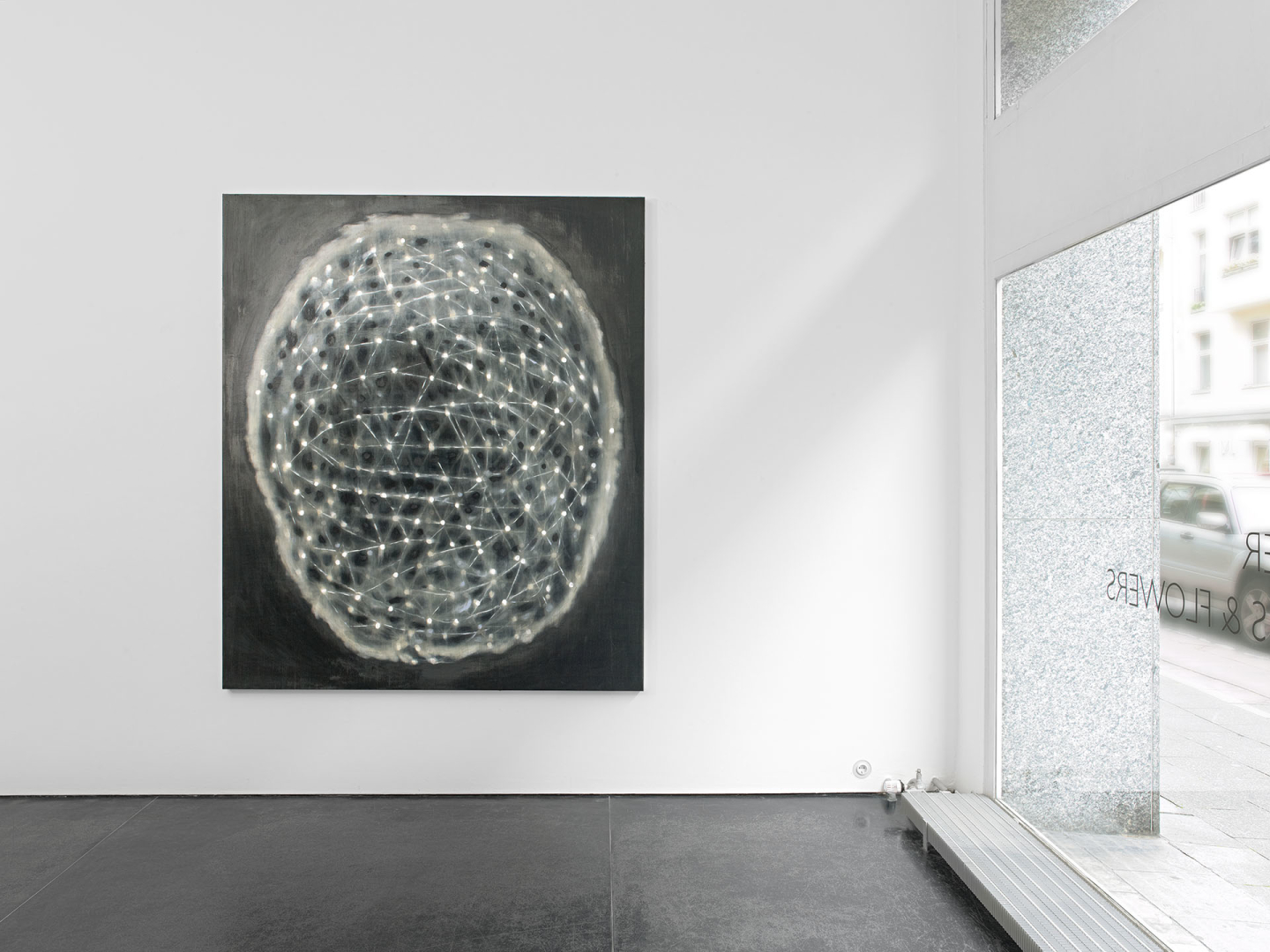
Die kontinuierliche Auseinandersetzung Bleckners mit der Vergänglichkeit spiegelt sich auch in den „Brain“ Arbeiten wieder, die bei Jablonka Pasquer Projects gezeigt werden. Dargestellt sind menschliche Gehirne, umzogen von feinen Linien, die mit kleinen Punkten verknüpft sind. Anreiz findet Bleckner in mikroskopischen Bilder und detaillierten medizinischen Illustrationen, die ihm zugleich auch als Zeugnis der Sterblichkeit dienen und Bezug auf die Diagnose des Vaters nehmen, der an Krebs erkrankte. Auch die Arbeit „My sister’s brain“ (2012) fügt sich in diese Auseinandersetzung ein. Vorlage für das großformatige Bild war der Scan des Gehirns seiner Schwester, die an Schizophrenie erkrankte. Bleckners Interesse an der Krankheit des Vaters und der Schwester korrespondiert mit seiner langjährige Auseinandersetzung mit Krankheitsverläufen oder wie er es beschreibt: „The idea that the body is so perfect, until it’s not perfect. It’s a fragile membran that separates us from disaster.“

Ross Bleckner wurde 1949 in New York City geboren und wuchs in Hewlett, NY, auf. 1971 Bachelor of Arts an der New York City University und 1973 Master of Fine Arts am California Institute of the Arts, Valencia, CA.

Bleckners Werke befinden sich heute in großen Museen wie im Museum of Modern Art und im Whitney Museum of American Art in New York. Zahlreiche Einzel- und Gruppenausstellungen. Unter anderem im San Francisco Museum of Modern Art, San Francisco 1988; Kunsthalle Zürich, Zürich 1990; Kölnischer Kunstverein, Köln 1991; Martin Gropius Bau, Berlin 1991; Moderna Museet, Stockholm 1991; Museum of Modern Art, New York, 1994; Guggenheim Museum, New York 1995; Reina Sofia, Madrid, 1996; Whitney Museum of American Art, New York 1999; L. A. County Museum, Los Angeles, 2001; Kunstmuseum Luzern, Luzern 2003; Esberg Art Museum, Esberg, Denmara, 2004; Zentrum Paul Klee, Bern, 2008; Kawaguchiko Museum of Art, Yamanashi Pref. 2011.

| EN

The Jablonka Gallery and Jablonka Pasquer Projects are pleased to present new works by American artist Ross Bleckner.

Born in New York City in 1949, painter Ross Bleckner is regarded as one of the protagonists of the Op Art movement – a style of visual arts developed in the 1960s which plays with optical illusions.

The works that are currently on display in the Jablonka Gallery and at Jablonka Pasquer Projects bear witness to Bleckner’s interest in blurred images and disillusion – in mixing up things in such a way that their identity cannot be foreseen or deciphered.
For instance, this is illustrated by an image of a dove gliding contourlessly through the night darkness. This is one of the “Birds” and “Flowers” works being exhibited in the Jablonka Gallery.

The artist explains his great interest in light and darkness, in the interplay between light and shade in both technical and metaphorical terms: “I’d rather bring dark out of light than layer dark over night. It’s just my optimism, not infantile, but the childlike part of my brain that wants to make things better, make things work. There’s light at the end.”

Bleckner’s ongoing dialogue with the past is also reflected in the “Brain” works that are being shown at Jablonka Pasquer Projects. These depict human brains, surrounded by fine lines linked with small dots. Bleckner finds inspiration in microscopic images and detailed medical illustrations which serve at the same time as an indication of mortality, while also referencing the diagnosis of his father, who died of cancer. The work entitled “My sister’s brain” (2012) can also be allocated to this dialogue. The template for this outsize image was a brain scan from his sister, who was diagnosed with schizophrenia. Bleckner’s interest in his father’s and sister’s conditions stems from a longstanding fascination with disease progressions: “The idea that the body is so perfect, until it’s not perfect. It’s a fragile membrane that separates us from disaster.”

Ross Bleckner was born in New York City in 1949 and grew up in Hewlett, NY. In 1971, he graduated from New York City University with a Bachelor of Arts and then with a Master of Fine Arts from California Institute of the Arts, Valencia, CA, two years later.
Today, Bleckner’s works can be found in major museums such as the Museum of Modern Art and in the Whitney Museum of American Art in New York. His numerous group and individual exhibitions include: San Francisco Museum of Modern Art, San Francisco 1988; Kunsthalle Zürich, Zurich 1990; Kölnischer Kunstverein, Cologne 1991; Martin Gropius Bau, Berlin 1991; Moderna Museet, Stockholm 1991; Museum of Modern Art, New York, 1994; Guggenheim Museum, New York 1995; Reina Sofia, Madrid, 1996; Whitney Museum of American Art, New York 1999; L.A. County Museum, Los Angeles, 2001; Kunstmuseum Luzern, Luzern 2003; Esbjerg Art Museum, Esbjerg, Denmark, 2004; Zentrum Paul Klee, Bern, 2008; Kawaguchiko Museum of Art, Yamanashi Pref. 2011.

YUTAKA TAKANASHI, Something Else

SOMETHING ELSE
Yutaka Takanashi

September 8th – November 3rd, 2012
 

| DE
Galerie Priska Pasquer is pleased to present the second exhibition in Germany to be devoted exclusively to the works of Japanese photographer Yutaka Takanashi (born 1935).
 
One of the founders of the legendary “Provoke” group that revolutionised Japanese photography at the end of the 1960s, Takanashi’s influence can still be felt in Japan and in the West to this day.
 
Only recently, the works of Yutaka Takanashi were on display at the “Yutaka Takanashi” solo show at Fondation Henri Cartier-Bresson, Paris. The Galerie Priska Pasquer exhibition features a selection of works from the Paris exhibition. Among the images on display are black-and-white photographs from the publication “Toshi-e” (Towards the City, 1974) and early colour photographs from the volume “Machi” (Town, 1977) in addition to works from the series “Shinjuku – Text of a City” from 1982-83.
 
The central theme of Yutaka Takanashi’s work is the restless shift in the Tokyo cityscape against the backdrop of the rapidly changing Japanese society.
In “Toshi-e”, Takanashi combines a multi-layered image of Tokyo and its inhabitants with glimpses of bleak, gloomy landscapes – generally denuded of people – on which the city and industry have taken their toll. While the urban photos still adhere to the subjective documentary photography approach, the landscape images are wholly in the radical “Provoke” style, which is characterised in Japan as “are, bure, boke” (“grainy, blurred and out of focus”).
With this raw, fleeting and expressive imagery, Takanashi and the other members of the “Provoke” group – which included, among others, Daido Moriyama – finally broke with the aesthetic of “reporting” photography and, in turn, with the notion that photography is capable of creating an authentic image of reality. At the same time, Takanashi’s “Toshi-e” creates a gloomy future vision of an industrial nation whose environment appears increasingly hostile to life and in which human beings are ultimately foreign bodies.
 
Right after “Toshi-e”, Yutaka Takanashi changed his style of photography fundamentally. Instead of the moving 35mm camera, Takanashi switched to a large plate camera. In “Machi” (Town), Takanashi shows the vanishing pre-war Tokyo. In precise Cibachrome prints with warm colours, Takanashi describes the narrow suburban streets where old-fashioned wood and brick buildings are home to small shops and businesses.
The exhibition also shows works from the series “Shinjuku – Text of the City” (1982-83) – colour photographs of small bars and narrow streets in the Shinjuku district. In this series, the artist focuses his attention on the spatial elements of the establishments.
 
The change in photographic techniques is indicative of Takanashi’s rational use of the medium of photography. With his choice of camera, he fell in line with the changing realities in Japan’s capital. He used the 35mm camera in motion to record the constant flow of the city and, in the case of Toshi-e, he was a “hunter” seeking to capture his bleak vision of Japan in a series of photographs. The plate camera enabled him – in what he termed “scrap picker” mode – to create a precise document of what he saw and to make time stand still long enough to gaze on the last remnants of traditional life and architecture, doomed by the breathless pace of change in Tokyo and Japanese society.
“I have taken many pictures of the changing city at different times. I changed cameras. I changed the distance from the object. I changed my walking speed when taking pictures. My aim is not to make a vast pyramid of masterpieces but rather to walk on the ground making anonymous pictures. I will keep on walking further and further along this infinite line.” (Yutaka Takanashi)
 
Brief biography
Born in in Shirogane-cho, Ushigome-ku (now Shinjuku, Tokyo) in 1935, studied photography at Nihon University. First photographs published in Sankei Camera. Provided darkroom assistance for Osamu Yagi. 1959-61: Studied at Kuawasa Design School.
Employed as a photographer at Nippon Design Center; received several awards for his advertising photography. Undertook non-commercial photographic projects at the same time. 1968: Founded Provoke magazine together with Takuma Nakahira, Takahiko Okada and Koji Taki. 1974: First publication Toshi-e (Towards the City), which is seen as a masterpiece of the Provoke era. Works in black-and-white and in colour, imbued with a fascination for people and urban space, are included in further photo books such as Machi, Tokyo-jin 1978-1983 and Miyako no Kao. 1980: Assistant Professor, 1982-2000 Full Professor at Tokyo Zokei University of Art and Design.
Received many awards, including the Japan Photo Critics Association Award as “Newcomer” in 1964, the Grand Prix Youth Biennale in Paris in 1967, the Award of the Year from the Photographic Society of Japan in 1984 and 1993, and the Domon Ken Award in 2012. Yutaka Takanashi lives and works in Tokyo.
The works of Yutaka Takanashi have been shown in a variety of individual and group exhibitions. These include “Fifteen Photographers Today”, National Museum of Modern Art, Tokyo 1974; “New Photography from Japan”, Kunsthaus Graz, 1976; “Photokina ‘78”, Cologne 1978; “Tokyo, City Perspective”, Tokyo Metropolitan Museum of Photography, Tokyo 1990; “Japanese Culture: the Fifty Postwar Years”, Meguro Museum of Art, Tokyo 1996; Retrospectives: “Yutaka Takanashi: Field Notes of Light”, National Museum of Modern Art, Tokyo 2009; “Yutaka Takanashi, Photography 1965-74” Galerie Priska Pasquer, Cologne 2010; “Tokyo-e”, Le Bal, Paris, 2011; “Yutaka Takanashi”, Fondation Henri Cartier-Bresson, Paris 2012.
 
Selected publications
– Toshi-e (Towards the City). Tokyo 1974
– Machi (Town). Tokyo 1977
– Toshi wa Yume Mizu (City doesn’t dream). Tokyo 1979
– Tokyo-jin 1979-1983 (Tokyoites 1978 – 1983). Tokyo 1983
– Miyako no Kao: Visages of a Metropolis. Tokyo (1989)
– Menmoku Yakujo: Jombutsushashin kurunikuru (Chronicle of Portrait Works), 1964-1989. Tokyo 1990
– Jinzo (Human Images). Tokyo 1979
– Hatsukuni: Pre-Landscape. Tokyo 1993
– Chimeiron: Genius Loci. Tokyo 2000
– Nostalgia. Tokyo
– Kakoi-machi (Fencing City). Tokyo 2007
– Yutaka Takanashi. Field Notes of Light. Tokyo 2009
– Yutaka Takanashi, Toshi-e, Books on Books #6, New York 2010
– Yutaka Takanashi – Photography 1965-1974, Berlin 2010
– In’. Tokyo 2011
– Yutaka Takanashi, Paris 2012
| EN
Galerie Priska Pasquer is pleased to present the second exhibition in Germany to be devoted exclusively to the works of Japanese photographer Yutaka Takanashi (born 1935).
 
One of the founders of the legendary “Provoke” group that revolutionised Japanese photography at the end of the 1960s, Takanashi’s influence can still be felt in Japan and in the West to this day.
 
Only recently, the works of Yutaka Takanashi were on display at the “Yutaka Takanashi” solo show at Fondation Henri Cartier-Bresson, Paris. The Galerie Priska Pasquer exhibition features a selection of works from the Paris exhibition. Among the images on display are black-and-white photographs from the publication “Toshi-e” (Towards the City, 1974) and early colour photographs from the volume “Machi” (Town, 1977) in addition to works from the series “Shinjuku – Text of a City” from 1982-83.
 
The central theme of Yutaka Takanashi’s work is the restless shift in the Tokyo cityscape against the backdrop of the rapidly changing Japanese society.
In “Toshi-e”, Takanashi combines a multi-layered image of Tokyo and its inhabitants with glimpses of bleak, gloomy landscapes – generally denuded of people – on which the city and industry have taken their toll. While the urban photos still adhere to the subjective documentary photography approach, the landscape images are wholly in the radical “Provoke” style, which is characterised in Japan as “are, bure, boke” (“grainy, blurred and out of focus”).
With this raw, fleeting and expressive imagery, Takanashi and the other members of the “Provoke” group – which included, among others, Daido Moriyama – finally broke with the aesthetic of “reporting” photography and, in turn, with the notion that photography is capable of creating an authentic image of reality. At the same time, Takanashi’s “Toshi-e” creates a gloomy future vision of an industrial nation whose environment appears increasingly hostile to life and in which human beings are ultimately foreign bodies.
 
Right after “Toshi-e”, Yutaka Takanashi changed his style of photography fundamentally. Instead of the moving 35mm camera, Takanashi switched to a large plate camera. In “Machi” (Town), Takanashi shows the vanishing pre-war Tokyo. In precise Cibachrome prints with warm colours, Takanashi describes the narrow suburban streets where old-fashioned wood and brick buildings are home to small shops and businesses.
The exhibition also shows works from the series “Shinjuku – Text of the City” (1982-83) – colour photographs of small bars and narrow streets in the Shinjuku district. In this series, the artist focuses his attention on the spatial elements of the establishments.
 
The change in photographic techniques is indicative of Takanashi’s rational use of the medium of photography. With his choice of camera, he fell in line with the changing realities in Japan’s capital. He used the 35mm camera in motion to record the constant flow of the city and, in the case of Toshi-e, he was a “hunter” seeking to capture his bleak vision of Japan in a series of photographs. The plate camera enabled him – in what he termed “scrap picker” mode – to create a precise document of what he saw and to make time stand still long enough to gaze on the last remnants of traditional life and architecture, doomed by the breathless pace of change in Tokyo and Japanese society.
“I have taken many pictures of the changing city at different times. I changed cameras. I changed the distance from the object. I changed my walking speed when taking pictures. My aim is not to make a vast pyramid of masterpieces but rather to walk on the ground making anonymous pictures. I will keep on walking further and further along this infinite line.” (Yutaka Takanashi)
 
Brief biography
Born in in Shirogane-cho, Ushigome-ku (now Shinjuku, Tokyo) in 1935, studied photography at Nihon University. First photographs published in Sankei Camera. Provided darkroom assistance for Osamu Yagi. 1959-61: Studied at Kuawasa Design School.
Employed as a photographer at Nippon Design Center; received several awards for his advertising photography. Undertook non-commercial photographic projects at the same time. 1968: Founded Provoke magazine together with Takuma Nakahira, Takahiko Okada and Koji Taki. 1974: First publication Toshi-e (Towards the City), which is seen as a masterpiece of the Provoke era. Works in black-and-white and in colour, imbued with a fascination for people and urban space, are included in further photo books such as Machi, Tokyo-jin 1978-1983 and Miyako no Kao. 1980: Assistant Professor, 1982-2000 Full Professor at Tokyo Zokei University of Art and Design.
Received many awards, including the Japan Photo Critics Association Award as “Newcomer” in 1964, the Grand Prix Youth Biennale in Paris in 1967, the Award of the Year from the Photographic Society of Japan in 1984 and 1993, and the Domon Ken Award in 2012. Yutaka Takanashi lives and works in Tokyo.
The works of Yutaka Takanashi have been shown in a variety of individual and group exhibitions. These include “Fifteen Photographers Today”, National Museum of Modern Art, Tokyo 1974; “New Photography from Japan”, Kunsthaus Graz, 1976; “Photokina ‘78”, Cologne 1978; “Tokyo, City Perspective”, Tokyo Metropolitan Museum of Photography, Tokyo 1990; “Japanese Culture: the Fifty Postwar Years”, Meguro Museum of Art, Tokyo 1996; Retrospectives: “Yutaka Takanashi: Field Notes of Light”, National Museum of Modern Art, Tokyo 2009; “Yutaka Takanashi, Photography 1965-74” Galerie Priska Pasquer, Cologne 2010; “Tokyo-e”, Le Bal, Paris, 2011; “Yutaka Takanashi”, Fondation Henri Cartier-Bresson, Paris 2012.
 
Selected publications
– Toshi-e (Towards the City). Tokyo 1974
– Machi (Town). Tokyo 1977
– Toshi wa Yume Mizu (City doesn’t dream). Tokyo 1979
– Tokyo-jin 1979-1983 (Tokyoites 1978 – 1983). Tokyo 1983
– Miyako no Kao: Visages of a Metropolis. Tokyo (1989)
– Menmoku Yakujo: Jombutsushashin kurunikuru (Chronicle of Portrait Works), 1964-1989. Tokyo 1990
– Jinzo (Human Images). Tokyo 1979
– Hatsukuni: Pre-Landscape. Tokyo 1993
– Chimeiron: Genius Loci. Tokyo 2000
– Nostalgia. Tokyo
– Kakoi-machi (Fencing City). Tokyo 2007
– Yutaka Takanashi. Field Notes of Light. Tokyo 2009
– Yutaka Takanashi, Toshi-e, Books on Books #6, New York 2010
– Yutaka Takanashi – Photography 1965-1974, Berlin 2010
– In’. Tokyo 2011
– Yutaka Takanashi, Paris 2012