*1966
Born in 1966, Andrei Molodkin attained international recognition in recent years owing to his politically motivated crude oil sculptures and large-scale ballpoint pen drawings and is to represent Russia this year at the 53rd Venice Biennale.
Andrei Molodkin’s sculptures consist of transparent Plexiglas structures that are hollowed out inside in the form of a phrase or sculpture. Using connected pipes, the artist then fills this matrix with crude oil from Chechnya, Iraq or Iran.
In his sculptures, Molodkin uses words and shapes that play a central role in political, economic or religious issues. He sees phrases or slogans such as ‘Hope’, ‘Democracy’, ‘Das Kapital’ or ‘Yes we can’ as empty vessels that can be filled in very different ways depending on the context.
Into these moulds, Molodkin injects crude oil – one of the world’s oldest raw materials yet the lifeblood of today’s economic system.
In this way, Molodkin initiates a political and cultural discourse in which the terms used – and, in turn, man’s cultural heritage – are replaced by ‘black gold’ as the central commodity.
Words such as ‘hope’ are – and always have been – used and abused by political and religious leaders and their agents. By filling these with crude oil, the artist highlights the radical extent to which economics has penetrated and dominated culture and politics.
In a time in which words are used as vessels into which equally empty ideologies and discourses can be poured, Andrei Molodkin sees not only his works of art but also culture as a whole as being filled with “an emptiness that we have to fill and affirm with economics”.
By making crude oil a key part of his art, Andrei Molodkin transforms this essential industrial raw material into an aesthetic form. Besides the aspect of increasing the (mercantile) value of a material that is rarely used in art, Molodkin sees the fuel – which, after all, is derived from long-dead organisms – as symbolising the cycle of life and death, a theme that is also addressed in his drawings.
Molodkin’s relationship with crude oil began back in his army days, when he was given the task of accompanying gigantic oil cisterns that were being transported to Siberia by rail, using residue from the containers as a means of keeping warm. Later on, when working on a photography project in Northern Russia, he came into contact with the giant crude oil cisterns which he found to look like cathedrals on the inside. This reminded the artist of reports in the Russian media describing crude oil as the “flesh and blood of the nation” and inextricably linking national resources with the national identity.
It was during his time as a soldier that Andrei Molodkin began his ballpoint pen drawings. These large-scale drawings frequently feature a death’s head as a motif. As well as using the iconography of death, the time-consuming process involved in producing these works also brings together life and death: on the one hand birth in the creation of the picture, the entire evolution of which can be traced through ballpoint pen strokes, and, on the other, death symbolised by the completion of the work.
Molodkin creates ballpoint pen drawings with specific political or economic references – a prime example of this is ‘Gazprom’, which depicts the headquarters of Russian energy group Gazprom.
Andrei Molodkin’s latest project has generated extensive media coverage, with newspapers such as the Independent, Artinfo, the Evening Standard and The Times reporting on Molodkin’s intention of continuing to use the notion of crude oil to symbolise the cycle of life and death.
1966 Born in Boiu, Russia,
1976-1980 Attended the Special School of Arts-Plastiques, Boui),
(1985-1987 College of Arts, Krasnoe-on-Volga), and the
(1987-1992). Faculty of Interior Architecture of the Stroganov Art Academy, Moscow. Military service (1987-1992).
The artist has had his works featured in many individual and group exhibitions in Western and Eastern Europe and in the USA. In 2009 he represented Russia at the 53rd Venice Biennale and in 2012 the museum Villa Stuck, Munich, presented a major exhibition with his work in.
Furthermore, his works have been covered in publications such as Art Forum, Art Press, Third Text, Kh/Zh, the New York Times, the Village Voice and the Independent.
Cold War II, Ed. Margarity Tupitsyn, Victor Tupitsyn, Kashya Hildebrand Gallery, Zürich, 2007
Holy Oil. Ed. Margarity Tupitsyn, Victor Tupitsyn, Tretyako Gallery, London 2009
Liquid Modernity. Ed. Margarity Tupitsyn, Victor Tupitsyn,, Orel Art, London 2009
Victory over the Future. Russian Pavilion. 53rd International Art Exhibition. La Biennale di Venezia, 2009
Andrei Molodkin. Liquid Black. Museum Villa Stuck, Munich, 2012

1969-2013
Born in 1969, Monroe (Vladislav Mamyshev-Monroe) died tragically in March, 2013, while visiting in Bali, Indonesia. He was one of the most visible Perestroika artists and became famous for his impersonations of Marlin Monroe, Luibov Orlova, Adolf Hitler, and many other figures, who either inflicted disaster or fell victim to it. In the early 1990s, Monroe initiated the socalled Piratskoe televidenie (Pirate TV) in Russia, which turned out to be the most innovative medium, both aesthetically and issue-wise. He exhibited world-wide and befriended many internationally recognized artists, including Marina Abramovic. Monroe was featured in the movies
and played Polonius in Shakespeare’s Hamlet in Polytheatre. Yet, his most important references should be traced to his milieu in St.Petersburg – the group of artists and musicians, such as Timur Novikov, Viktor Tsoi of Kino, Segei Kuryokhin
of Pop-Mekhanika, and Sergei Bugaev-Afrika. Monroe’s works are in a variety of museums in Russia and in the West. Before his death, he was preparing a performance for Art Paris.
VT/MT

Ivo Pannaggi (1901-1981)
Ivo Pannaggi was an Italian painter, designer, and architect. Although primarily associated with the Italian Futurist movement, Pannaggi was also heavily influenced by International Constructivism and Neoplasticism. The artist’s oeuvre spanned across a wide range of media including painting, collage, graphic design, interior design, architecture, set design, costume design and industrial design.

Tato (Guglielmo Sansoni, 1886-1974) .
Tato, born in Bologna in 1886, died in Rome in 1774, was an Italian futurist artist, one of the protagonists of aeropainting. Tato emerged after the First World War as a leader of the Emilian Futurist group.
In 1920 he organized a fake funeral in order to die as “Guglielmo Sansoni” and to reborn as the Futurist Tato. He met Filippo Tommaso Marinetti for the first time in Bologna in 1922 and they became friends. From 1922 until the early Forties he was present in Futurist exhibitions and active as a creator and organizer. His Casa d’Arte in Bologna also produced designs for interior decoration. In 1924 he moved to Rome. He signed the Manifesto of Futurist Aeropainting, 1929 and with Marinetti launched the Manifesto of Futurist Photography, 1930. In 1934 he cosigned the manifestos on Mural Plastic Art and African Poetry, Music and Architecture, with Filippo Tommaso Marinetti, Fillia and Carlo Cocchia.
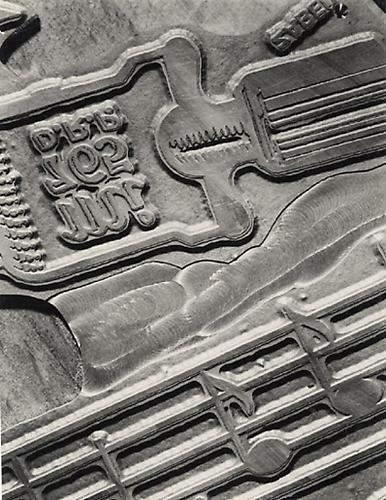
Walter Peterhans (1897-1960)
Walter Peterhans was best known as a teacher and course leader of photography at the Bauhaus from 1929 through 1933 (and at the Reimann School in Berlin), and his subsequent immigration to Chicago in 1938 to teach the ‘visual training’ course to architecture students at Illinois Institute of Technology under the direction of Mies van der Rohe. There were ten units or tasks to this course, to be followed over four semesters. The course was so successful, it survived Peterhans by over thirty years. At the Bauhaus, Peterhans’ teaching involved using the theories of Kant, Plato and Pythagoras to show how beauty is constructed in the mind, and how it can be created in works of art.
In 1953 Peterhans was part of the initial core faculty at the Ulm School of Design (Hochschule für Gestaltung, 1953-1968) in Germany, which became an renowned, influential design school.
Peterhans’ own work in the 1930s was close-up, still-life silver gelatin prints of everyday objects, and he came to the Bauhaus at the invitation of Hannes Meyer. In America he was briefly married to American architect Gertrude Lempp Kerbis before he married Brigitte Schlaich, also an architect, in 1957.
—
After military service and a period as a prisoner of war, Walter Peterhans began studying at the department of engineering at the Sächsische Technischen Universität (TU) Dresden in 1919. The following year, he studied mathematics, philosophy and art history at the Technische Hochschule München (TUM) and the university in Göttingen. He then studied photographic reproduction and printing processes at the Staatliche Akademie für Grafische Künste und Buchgewerbe Leipzig (Academy of Visual Arts, Leipzig) from 1925 to 1926. After completing his studies and gaining his master’s certificate as a photographer in Weimar, Peterhans moved to Berlin in 1926/27. A year later, he was already established there as an independent industrial and portrait photographer of international renown.
In 1929, Walter Peterhans was appointed to the Bauhaus Dessau by Hannes Meyer, the second Bauhaus director succeeding Walter Gropius, as a photography teacher and director of the photography department. When it closed in 1933, he continued to work in Berlin. After the dissolution of the Bauhaus in 1933, Peterhans taught at Werner Graeff‘s photography school in Berlin.
From 1934, he taught at the Reimann-Schule in Berlin, which changed its name to the Kunst- und Werk-Privatschule für Gestaltung (private school of design, art and workmanship) in 1936. In addition, he wrote photography manuals and worked as a freelance photographer. From 1933 to 1936, he wrote at least four publications for the publishing house Knapp-Verlag. In 1938, Peterhans emigrated to the United States and was given a professorship lecturing in visual training, analysis and art history at the department of architecture of the Armour Institute, Chicago, later the Illinois Institute of Technology (IIT), then directed by Ludwig Mies van der Rohe. In addition to teaching at the IIT (until 1960), he worked from 1945 to 1947 as a research associate for philosophy at the University of Chicago. In 1953, as a guest lecturer at the Ulm School of Design (HfG), he was the head of the first basic course to follow the pedagogical principles of the Bauhaus. In 1959/60, he taught as a guest lecturer at the University of Fine Arts in Hamburg.
Walter Peterhans (1897-1960)
Nach Kriegsdienst und Gefangenschaft begann Walter Peterhans 1919 ein Studium an der Mechanischen Abteilung der Sächsischen Technischen Universität in Dresden. Im folgenden Jahr studierte er Mathematik, Philosophie und Kunstgeschichte an der Technischen Hochschule in München und an der Universität in Göttingen. Von 1925 bis 1926 folgte ein Studium der fotografischen Reproduktions- und Druckverfahren an der Staatlichen Akademie für Graphische Künste und Buchgewerbe in Leipzig. Nach Beendigung des Studiums und nachdem er die Meisterprüfung als Fotograf in Weimar abgelegt hatte, ging Peterhans 1926/27 nach Berlin und etablierte sich ein Jahr später als selbstständiger Industrie- und Porträtfotograf mit bereits damals internationalem Renommee.
Der zweite Bauhausdirektor nach Walter Gropius, Hannes Meyer, berief Walter Peterhans 1929 als Leiter der Fotografieabteilung und Lehrer für Fotografie an das Bauhaus in Dessau, wo er bis zu dessen Schließung in Berlin 1933 wirkte. Nach der Auflösung des Bauhauses 1933 lehrte Peterhans an Werner Graeffs Berliner Fotoschule.
Ab 1934 unterrichtete er an der Reimann-Schule in Berlin, die 1936 in Kunst- und Werk-Privatschule für Gestaltung umbenannt wurde. Zudem arbeitete er als Autor von Foto-Handbüchern und als freischaffender Fotograf. Zwischen 1933 und 1936 konnte er mindestens vier Publikationen im Knapp-Verlag veröffentlichen. 1938 emigrierte Peterhans in die Vereinigten Staaten von Amerika und erhielt in der von Ludwig Mies van der Rohe übernommenen Architekturabteilung des Armour Institute in Chicago, dem späteren Illinois Institute of Technology (IIT), eine Professur mit den Lehrgebieten Visual Training, Analysis und Art History. Neben seiner Lehrtätigkeit am IIT, die er bis 1960 ausführte, arbeitete er von 1945 bis 1947 als Research Associate für Philosophie an der University of Chicago. 1953 leitete er als Gastdozent an der Hochschule für Gestaltung in Ulm (HFG) den ersten Grundkurs nach pädogogischen Prinzipien des Bauhauses. 1959/60 lehrte er als Gastdozent an der Hochschule für bildende Künste in Hamburg.


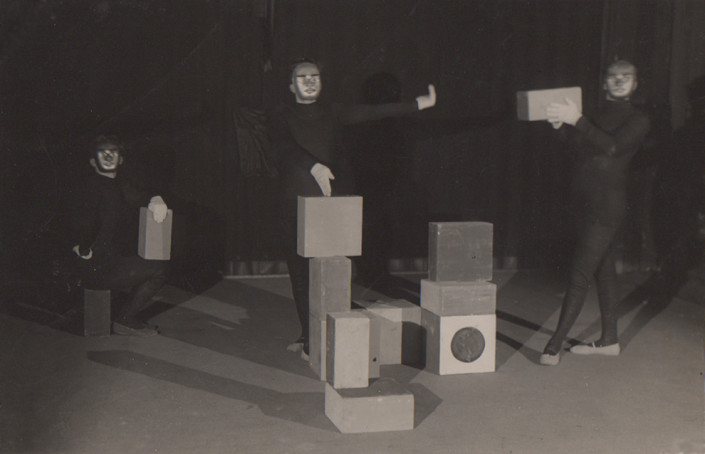
T. Lux Feininger (1910-2011)
As the son of the Bauhaus masters Lyonel Feiniger, Theodore Lux Feininger experienced the Weimar and the Dessau Bauhaus. He began his studies at the Bauhaus Dessau in 1926 with the preliminary course of Josef Albers. After the preliminary course, he attended classes with László Moholy-Nagy, Paul Klee and Wassily Kandinsky. He worked in Oskar Schlemmer’s theatre workshop until the winter semester of 1929. In addition, he was an active member of the Bauhaus-Kapelle band. Just like his brother Andreas, T. Lux Feininger increasingly dedicated himself to photography towards the end of his studies. Between 1927 and 1931, he worked as a photo reporter for the Berlin DEPHOT agency, as well as for various periodicals and illustrated magazines.
Starting in 1930, he primarily turned to painting. After a number of years in Paris and Berlin, he immigrated to the United States in 1936 and created a respectable body of artistic work there as a freelance painter. After the end of the Second World War, he received various university teaching positions for painting such as those at Sarah Lawrence College and the Fogg Museum of the Harvard University in Cambridge/Mass. Starting in 1962, he also worked as a teacher in the painting department of the Boston Museum School.
With the photography that he created beginning in the mid-1920s, he had a lasting effect on the image of life at the Bauhaus. Above all, his photo of Sports at the Bauhaus – the picture of the Bauhäuslers playing football in front of the Dessau building – still has a virtually iconic character.
T. Lux Feininger (1910 – 2011)
Als Sohn des Bauhausmeisters Lyonel Feiniger erlebte Theodore Lux Feininger das Weimarer und Dessauer Bauhaus. Sein eigenes Studium am Bauhaus Dessau begann er 1926 mit dem Vorkurs bei Josef Albers und Unterricht bei László Moholy-Nagy, Paul Klee und Wassily Kandinsky. Bis zum Wintersemester 1929 arbeitete in der Bühnenwerkstatt bei Oskar Schlemmer und war außerdem aktives Mitglied der Bauhauskapelle. Gegen Ende seines Studiums widmete sich T. Lux Feininger, genau wie sein Bruder Andreas, zunehmend der Fotografie und arbeitete zwischen 1927 und 1931 als Fotoreporter der Berliner Agentur DEPHOT sowie für verschiedene Zeitschriften und Illustrierten.
Ab 1930 wandte er sich vor allem der Malerei zu. Nach einigen Jahren in Paris und Berlin emigrierte er 1936 in die Vereinigten Staaten, wo er als freischaffender Maler ein beachtliches künstlerisches Werk schuf. Nach Ende des Zweiten Weltkrieges erhielt er verschiedene Lehraufträge für Malerei, darunter am Sarah Lawrence College und am Fogg-Museum der Harvard University in Cambridge/Mass. Ab 1962 war er als Lehrer am Painting Department der Boston Museum School tätig.
Mit seinen seit Mitte der 1920er Jahre geschaffenen Fotografien prägte er das Bild vom Leben am Bauhaus nachhaltig. Vor allem sein Foto Sport am Bauhaus, das Bild von Bauhäuslern, die vor dem Dessauer Gebäude Fußball spielen, hat heute geradezu ikonischen Charakter.
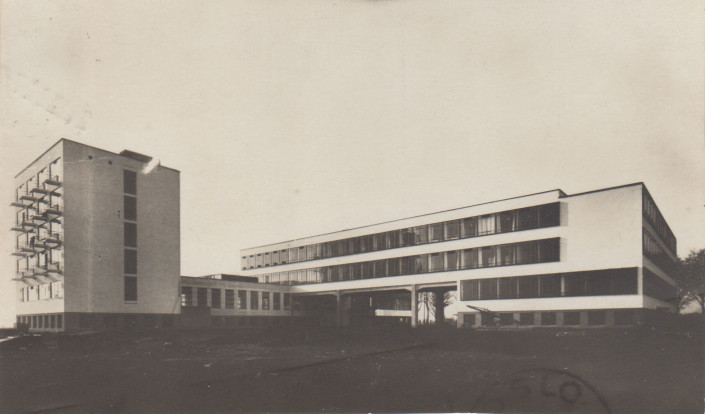
Lucia Moholy (1994 – 1989)
In 1912, Lucia Schulz qualified as a German and English teacher and moved on to university, studying art history and philosophy in Prague. From 1915 to 1918, she worked as an editor and copy editor for a number of publishing houses, including Hyperion and Kurt Wolff in Berlin. In 1919, she stayed in Heinrich Vogeler’s Barkenhoff (lit: Birch-tree cottage) in Worpswede near Bremen. She published Expressionist literature under the pseudonym Ulrich Steffen. In 1920, she became editor of the publishing house Rowohlt in Berlin. The following year, she married László Moholy-Nagy, who would go on to become a Bauhaus master. From 1922 to 1923, they worked together in the field of experimental photography.
With her husband appointed to the Bauhaus Weimar in 1923, Moholy began an apprenticeship in one of its photography studios and at the same time photographed objects produced in the Bauhaus workshops for publications. From 1923 to 1925, she worked as a freelance photographer at the Bauhaus Weimar, resuming the same post at the Bauhaus Dessau from 1925 to 1928. From 1925 to 1926, she studied photographic and printing techniques at the Akademie für grafische Künste und Buchgewerbe Leipzig (Academy of Visual Arts, Leipzig). Her important works from this period include a comprehensive photo series on the new Bauhaus Building and the Masters’ Houses in Dessau for the press and for the Bauhaus Books, which established her as an authentic voice in the process of documenting the Bauhaus by 1928. During this period, she also produced photographs of objects made in the workshops and portrait series of the Bauhaus’s teachers and friends.
After leaving the Bauhaus in 1928, she worked with the photographic agency Mauritius and was represented at the Deutscher Werkbund (German Work Federation) exhibition Film und Foto in Stuttgart in 1929. She separated from her husband the same year. As the successor of Otto Umbehr (Umbo), she was hired as a specialist subject teacher for photography at Johannes Itten’s school in Berlin. In 1933, she emigrated via Prague, Vienna and Paris to London and worked there as a portrait photographer and author. In the following years, she directed documentary films for numerous important archives and UNESCO projects in the Near and Middle East. After relocating to Switzerland in 1959, she worked in publishing, focusing on art criticism and art education, and participated in many exhibitions.
Lucia Moholy (1994 – 1989)
1912 erwarb Lucia Schulz die Lehramtsbefähigung für Deutsch und Englisch und studierte danach Kunstgeschichte und Philosophie an der Universität in Prag. Zwischen 1915 und 1918 war sie als Redakteurin und Lektorin in mehreren Verlagen tätig, u. a. bei Hyperion und Kurt Wolff in Berlin. 1919 hielt sie sich auf dem Barkenhoff von Heinrich Vogeler in Worpswede bei Bremen auf. Unter dem Pseudonym Ulrich Steffen veröffentlichte sie expressionistische Literatur. 1920 war sie Redakteurin des Rowohlt Verlags in Berlin. Im folgenden Jahr heiratete sie den späteren Bauhausmeister László Moholy-Nagy. Zwischen 1922 und 1923 arbeiteten beide gemeinsam auf dem Gebiet der experimentellen Fotografie.
Nach der Berufung ihres Mannes 1923 an das Bauhaus Weimar begann sie in einem dortigen Fotoatelier eine Lehre und fotografierte gleichzeitig für Publikationen Werkstattarbeiten des Bauhauses. Von 1923 bis1925 war sie als Fotografin freie Mitarbeiterin am Bauhaus in Weimar, von 1925 bis 1928 in derselben Funktion am Bauhaus in Dessau. Zwischen 1925 und 1926 studierte sie Foto- und Drucktechnik an der Akademie für grafische Künste und Buchgewerbe in Leipzig. Zu ihren bedeutenden Arbeiten aus dieser Zeit zählen eine große Bildserie vom Neubau des Bauhauses und der Meisterhäuser in Dessau für die Presse und die Bauhausbücher, die ihr den Rang einer authentischen Dokumentaristin des Bauhauses vor 1928 verliehen. Gleichzeitig entstanden Sachfotografien der Werkstattarbeiten und Porträtserien von Bauhaus-Lehrern und Freunden.
Nach dem Weggang vom Bauhaus 1928 arbeitete sie mit der Fotoagentur Mauritius zusammen und war 1929 auf der Werkbundausstellung „Film und Foto“ in Stuttgart vertreten. Im selben Jahr trennte sie sich von ihrem Mann. Als Nachfolgerin von Otto Umbehr (Umbo) wurde sie als Fachlehrerin für Fotografie an die Itten-Schule in Berlin engagiert. 1933 emigrierte sie über Prag, Wien und Paris nach London und arbeitete dort als Porträtfotografin und Autorin. In den folgenden Jahren leitete sie die Verfilmung zahlreicher bedeutender Archive und Projekte der UNESCO in Ländern des Nahen und Mittleren Ostens. Nachdem sie 1959 in die Schweiz übersiedelte, konzentrierte sie sich auf eine publizistische Tätigkeit in Kunstkritik und -pädagogik und war mit ihrem fotografischen Werk an zahlreichen Ausstellungen beteiligt.

Grit Kallin-Fischer (1897-1973)
Before moving to the Bauhaus in Dessau, Grit Kallin-Fischer (née Vries) had already studied painting with Karl Doerbecker in Marburg in 1911 and with Lovis Corinth at the Academy of Art in Leipzig from 1915 to 1917. After the First World War, Kallin-Fischer moved to Berlin and joined the local circles of artists there. She met the Russian emigré and musician Marik Kallin and they were married in 1920. The couple moved to London together.
In 1926, at the age of 29, Grit Kallin enrolled at the Bauhaus as an already fully trained artist. Following the basic course with Josef Albers and painting classes with Paul Klee and Wassily Kandinsky, she studied in the metal workshop with László Moholy-Nagy and contributed to Oskar Schlemmer’s theatre class, where she met the American Bauhaus member Edward L. Fischer. She returned to Berlin in 1928.
She was already taking her first photographs while she was at the Bauhaus. They stand out from the mass of photographs produced at the Bauhaus through their brilliance, original formal language and artistic quality. In 1930, Kallin produced photographic works for the well-known journalGebrauchsgrafik.In 1931, she took part in the ‘Foreign Advertising Photography’ exhibition in New York alongside major figures from the photography and advertising scene such as Herbert Bayer, László Moholy-Nagy, Baron Adolphe de Meyer and Florence Henri.
Grit Kallin married Edward Fischer in 1934, and they moved to New York City together. In 1937, they moved into their own house, designed by Walter Gropius and Marcel Breuer. At the end of the Second World War, Kallin-Fischer travelled to Europe in 1947 and worked with the Swiss sculptor Hubacher in Zurich and the Italian sculptor Marini in Milan. When she returned to the USA at the end of the year, she continued to focus on sculpture and graphic design. Grit Kallin-Fischer died in Newtown, Pennsylvania, on 17 July 1973.
Grit Kallin-Fischer (1897-1973)
Bevor Grit Kallin-Fischer (geb. Vries) ans Bauhaus in Dessau kam, hatte sie bereits 1911 Malunterricht bei Karl Doerbecker in Marburg genommen und von 1915 bis 1917 bei Lovis Corinth an der Kunstakademie Leipzig Malerei studiert. Nach dem Ersten Weltkrieg ging Kallin-Fischer nach Berlin und schloss sich hier den ansässigen Künstlerkreisen an. Sie lernte den russischen Emigranten und Musiker Marik Kallin kennen, den sie 1920 heiratete. Gemeinsam zog das Paar nach London.
1926, im Alter von 29 Jahren, immatrikulierte sich die bereits voll ausgebildete Malerin Grit Kallin am Bauhaus. Nach der Grundlehre unter Josef Albers und Malklassen bei Paul Klee und Wassily Kandinsky studierte sie in der Metallwerkstatt bei László Moholy-Nagy und arbeitete in der Bühnenklasse von Oskar Schlemmer mit, wo sie dem amerikanischen Bauhäusler Edward L. Fischer begegnete. 1928 kehrte Kallin nach Berlin zurück.
Schon während ihrer Zeit am Bauhaus entstanden erste Fotografien, die in ihrer Brillanz, ihrer eigenen Formensprache und in ihrer künstlerischen Qualität aus der Masse der am Bauhaus entstandenen Fotografien hervorstechen. 1930 fertigte Kallin fotografische Arbeiten für die renommierte Zeitschrift “Gebrauchsgrafik” an. 1931 nahm sie an der Ausstellung “Foreign Advertising Photography” in New York neben festen Größen der Fotografie- und Werbeszene, wie Herbert Bayer, László Moholy-Nagy, Baron Adolphe de Meyer und Florence Henri teil.
1934 heiratete Grit Kallin Edward Fischer; gemeinsam siedeln sie nach New York City über. 1937 bezogen sie ihr eigenes Haus, das von Walter Gropius und Marcel Breuer entworfen wurde. Nach Kriegsende unternahm Kallin-Fischer 1947 eine Europareise, auf der sie mit dem Schweizer Bildhauer Hubacher in Zürich und dem italienischen Bildhauer Marini in Mailand zusammenarbeitete. Nach ihrer Rückkehr in die USA Ende des Jahres behielt die Künstlerin ihren Fokus auf Bildhauerei und grafische Gestaltung bei. Am 17. Juli 1973 starb Grit Kallin-Fischer in Newtown.
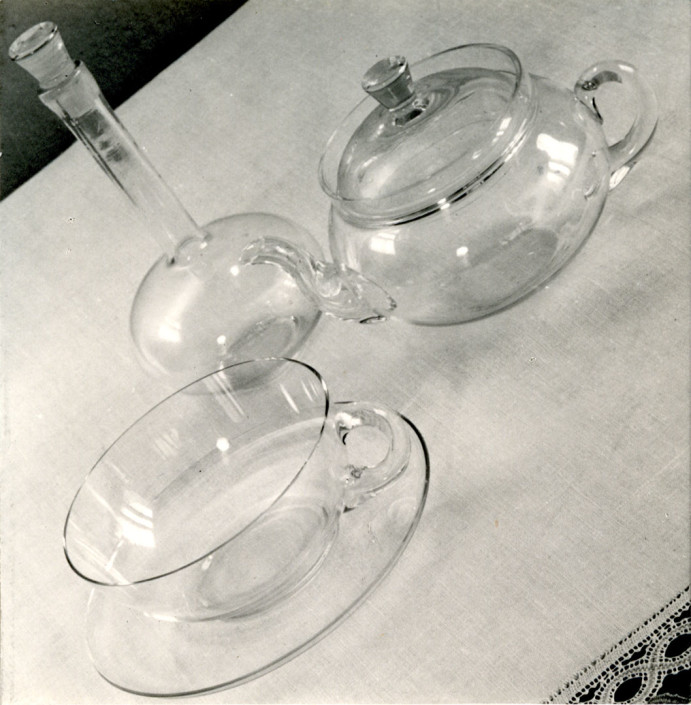
Founded by the architect Walter Gropius (1883–1969) in 1919, the Bauhaus was a utopian haven for avant-garde artists during the period of radical change and tenuous peace in Germany after World War I. A war veteran, Gropius found his battered country badly in need of rejuvenation and believed that the collective of Bauhaus artists could play an important role in that process. Based on the concept of the medieval cooperative of artists and craftsmen combining their talents to build the great Gothic cathedrals, the progressive school of art and design sought to bring together the fine and applied arts, human ingenuity, and modern technology in order to help construct a new rational, egalitarian, and ordered society.
In 1925 the school’s original home, Gropius relocated the Bauhaus to Dessau. On a level plain just outside of the city, Gropius constructed his Bauhaus building, a gleaming glass and concrete complex of interrelating structures that became the center of a small universe. Sheltered from the turmoil of the external world, it provided a stimulating and nurturing environment in which the artists could apply themselves to the task at hand. United in their goal to create new art fit for the modern era, they embraced novel techniques and free experimentation.
While architecture, typography, carpentry, metalwork, weaving, sculpture, wall painting, and theater all had established workshops at the school before 1929, photography was not taught or even organized as an extracurricular activity. In spite of this, it attracted an enthusiastic following, particularly after the arrival of the Hungarian Constructivist artist László Moholy-Nagy (1895–1946), whom Gropius appointed to lead the preliminary course and metal workshop in 1923. Aided by his wife, Lucia Moholy (1894–1989), the dynamic young artist had established himself as one of the prime movers and enthusiastic advocates of experimental photographic techniques.
The force of Moholy-Nagy’s talent and enthusiasm galvanized other artists to begin their own adventurous explorations. Unencumbered by the structured expectations of a formal course, photography at the Bauhaus was practiced as the best sort of play—its myriad modes and magical processes enchanted masters and students alike. Even as they recorded the beginner’s array of elementary topics, they were instinctively employing techniques absorbed from a variety of sources, ranging from Constructivism to illustrated newspapers to avant-garde film. The smaller cameras and faster exposures gave them a new dexterity, enabling them to keep time with the energetic pace of school life.
This aspect of photography at the Bauhaus is exemplified in the lively work of the young student Lux Feininger (born 1910), son of the painter and Bauhaus master Lyonel Feininger (1871–1956). Never without his camera, Lux roamed the school in search of activities he could transform into his characteristically exuberant views of student life. Possessing the dynamic immediacy of the most innovative press photography of this period, Feininger’s photograph captures a dramatic instant that perfectly expresses the youthful verve and spirited freedom that was clearly present on both sides of the camera.
With the departure of Gropius in 1928 and the controversial appointment of the Marxist architect Hannes Meyer (1889–1954) as his successor, the Bauhaus became increasingly unpopular with the local government and community. In 1930, Meyer was forced to resign and within two years the city completely withdrew funding, forcing the school’s closure. Although Ludwig Mies van der Rohe (1886–1969), the school’s final director, relocated it to Berlin as a private institution, it lasted only a year before it was permanently closed by the Nazis in 1933.
(Source: Metropolitan Museum of Art)
Das Staatliche Bauhaus wurde 1919 von Walter Gropius in Weimar als Kunstschule gegründet. Nach Art und Konzeption war es damals etwas völlig Neues, da das Bauhaus eine Zusammenführung von Kunst und Handwerk darstellte. Das historische Bauhaus stellt heute die einflussreichste Bildungsstätte im Bereich der Architektur, der Kunst und des Designs dar. Das Bauhaus bestand von 1919 bis 1933 und gilt heute weltweit als Heimstätte der Avantgarde der Klassischen Moderne auf allen Gebieten der freien und angewandten Kunst. Die Resonanz des Bauhauses hält bis heute an und prägt wesentlich das Bild modernistischer Strömungen.
Ein Leitbild des Bauhauses war, die Architektur als Gesamtkunstwerk mit den anderen Künsten zu verbinden. Deshalb verkündete das Bauhaus im Gründungsmanifest von 1919 auch: „Das Endziel aller bildnerischen Tätigkeit ist der Bau“. Im Laufe der Entwicklung resultiert jedoch besonders das heutige Industrie- und Grafikdesign aus diesen Ideen. In der Architektur hat sich das modulare Bauen nicht nur bei Industrieanlagen, sondern auch bei der Schaffung günstigen Wohnraums zum Beispiel in Satellitenstädten von Megametropolen durchgesetzt.
—
Das Bauhaus war während seiner nur vierzehnjährigen Existenz immer wieder gefährdet, bekämpft und verfolgt. Nicht weniger als dreimal wurde es aus politischen Gründen geschlossen. Die existenzbedrohenden Anfeindungen von außen führten zu großer interner Solidarität. Den Aufbruch in eine neue Zeit vollzogen die Bauhäusler deshalb nicht nur in ihrer Zusammenarbeit, sondern auch durch das gemeinsame Leben am Bauhaus.
Schon das Bauhaus-Manifest des Gründers Walter Gropius von 1919 verkündete als festen Bestandteil des Programms: „Theater, Vorträge, Dichtkunst, Musik, Kostümfeste. Aufbau eines heiteren Zeremoniells bei diesen Zusammenkünften.“ Hinzu kamen das gemeinsame Wohnen und Essen, die Erholung und der Sport, für die insbesondere das Bauhaus-Gebäude in Dessau vielfältige Möglichkeiten bot. In zahlreichen Fotografien hielten die Studenten ihr Zusammenleben fest. Sportaufnahmen vor der modernen Architektur des Bauhauses mit ihren lichten Balkons und Fensterflächen spiegeln das Bekenntnis zu einem modernen Leben, das den ganzen Menschen – Körper, Geist und Seele – umfasste.
In den berühmten Bauhaus-Festen ließen Lehrer wie Studenten ihrem kreativem Potenzial und ihrer Gestaltungsfreude freien Lauf. Wochenlang wurde an der Organisation und Gestaltung von Laternen-, Drachen-, Weihnachts- oder Mottofesten wie dem „bart-, nasen- und herzensfest“ oder dem „Metallischen Fest“ gearbeitet. Fast alle Werkstätten waren an der Umsetzung beteiligt. Die Feste förderten den Kontakt zwischen der Schule und der Öffentlichkeit, den Gemeinschaftsgeist und die Entfaltung des ‚Spieltriebs‘. Inspiriert durch Friedrich Schillers „Über die ästhetische Erziehung des Menschen“ hatte Oskar Schlemmer das Spiel als Kraft erkannt, die gerade durch ihr nicht zweckbestimmtes Schaffen das Schöpferische erst möglich mache. Er konzipierte die großen öffentlichen Feste und nutzte sie zugleich als eine Art Versuchsplatz für die von ihm geleitete Bühnenwerkstatt. Während den Festen der Weimarer Zeit noch der Geist der naturverbundenen Wandervogelbewegung anhaftete, wurden die der Dessauer Zeit zum kulturellen Ereignis. Nun tanzte man nicht mehr zur Musik einer Ziehharmonika, sondern zu den Jazzklängen der schnell auch über die Grenzen der Schule hinaus bekannten Bauhaus-Kapelle.
Der fortwirkende Ruf des Bauhauses verdankt sich so nicht zuletzt dem umfassenden Ansatz, mit dem Modernität und Fortschrittlichkeit in den verschiedensten Lebensgebieten erprobt wurden. Nach der Schließung des Bauhauses unter dem Druck der Nationalsozialisten trugen die emigrierten Bauhäusler dieses Lebensgefühl in alle Welt.
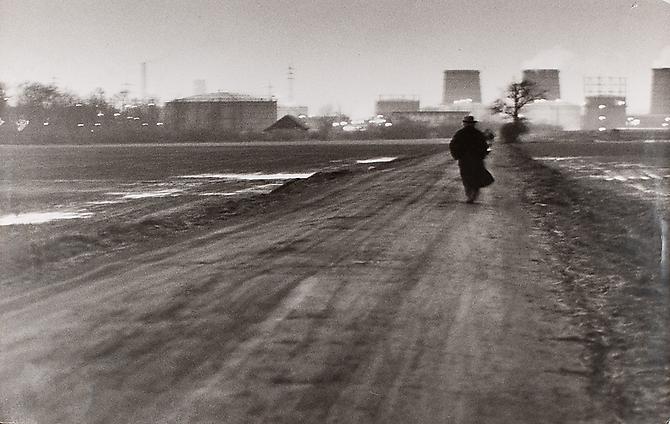
Chargesheimer (1924-1971)
Chargesheimer (Karl Heinz Hargesheimer) belongs among the most outstanding artists of his generation – as photographer, sculptor, stage designer and director. The press called Chargesheimer a “restlessly proliferative creative spirit” and an artist “who loves to provoke.”
He was during his entire life an individual who never compromised. “Chargesheimer was insatiable, a person for whom nothing was ever enough, who consumed himself, a malcontent with an entirely crazy life (…). He made life for himself and his peers as difficult as possible.”
(Georg Ramseger)
Chargesheimer began his career in 1947 as an independent photographer for various theaters in Germany. Towards the end of the 1940s he was in contact with the photographic group “fotoform.” In 1950 he participated in the “photo-kino” exhibition in Cologne and also in the legendary exhibitions of “Subjective Photography” in 1952 and 1954. At the core of Chargesheimer’s photographic oeuvre, alongside portraiture and experimental photography, stands his Street Photography, depictions of street life in Cologne and other cities of post-war Germany. These works were as a rule put by Chargesheimer into different series, and from 1957 to 1970 published in book form.
In 1958 he published concurrently two photography books, “Unter Krahnenbäumen” (the name of a tiny and notorious street behind the train station in Cologne) and “Im Ruhrgebiet“ (In the Ruhr Valley), with texts from the Nobel Prizewinner for Literature Heinrich Böll. In these works Chargesheimer portrays the everyday life of ordinary people from a radical subjective perspective without a trace of sentimentality. In close succession are found all the basic human emotions and behaviors: love and sadness, cares and conflicts, reflectiveness and high spirits, the dignity of age and the exuberance of youth.
Additionally, Chargesheimer breaks with photographic tradition and familiar clichees in the monograph “Im Ruhrgebiet” with regard to his portrayal of the Ruhr Valley (an industrial wasteland of steel and coal industry), which at the time caused great protest on the part of the mayors in the Ruhr Valley. Chargesheimer shows in these images, made in collaboration with Heinrich Böll, intense, direct impressions from the life of the humble worker, wherein the images are characterized by strong contrast between light and dark, and by a deep, dull black.
Next to Street Photography, portraiture is the largest second theme found in Chargesheimer’s work. In this work as well we see Chargesheimer’s disrespectfully piercing regard, wherein his visual language is strongly tied to theater photography. His portraits, for example those of the German Chancellor Konrad Adenauer, Louis Armstrong or Jean-Paul Belmondo, are often drastic, overloaded, theatrical and mask-like. Chargesheimer worked in his portraiture mainly with brightness, light and shadow, whereas detail would be removed by retouching.
Chargesheimer’s last publication “Köln 5 Uhr 30“ (Cologne 5:30) appeared in 1970. It is noteworthy – both in content and style – for its entirely novel approach. In this book, Chargesheimer shows an altered Cologne. His regard is cool and emotionless. Streets, squares and intersections are persistently viewed at the same focal distance and at the same height; his formerly so lively description of his home city now appears as bleak, ugly and inhuman.
Chargesheimer was an artist of unique stature, who steadfastly avoided what was trendy and fashionable in art. His direct and unsentimental photographs of the 50s and 60s show parallels to the work of the Swiss-American photographer Robert Frank or to Louis Faurer, whereby Chargesheimer’s biography proves that his work does not depend on the opinion of other contemporary photographers. This becomes only more obvious in Chargesheimer’s last series “Köln 5 Uhr 30” whose subject and aesthetic anticipates that of the “New Topographics” movement that would arise in the middle of the 1970s and have enduring influence on international urban and landscape photography.
Chargesheimer war Zeit seines Lebens ein Mensch, der keine Kompromisse einging: “Chargesheimer war ein Unersättlicher, dem nichts genügte, der sich verzehrte, ein Unglücklicher mit einem ganz verrückten Leben (…). Er machte es sich und seinen Mitmenschen so schwer wie möglich.“ (Georg Ramseger)
Chargesheimer begann 1947 seine Karriere als freiberuflicher Fotograf für verschiedene Theater in Deutschland. Ende der 1940er Jahre stand er in Kontakt mit der Gruppe “fotoform”. 1950 nahm Chargesheimer an der “photo-kino-Ausstellung” in Köln teil und den legendären Ausstellungen “Subjektive Fotografie” 1952 und 1954.
Im Zentrum von Chargesheimers fotografischen Oeuvre steht, neben Portraits und experimenteller Fotografie, vor allem die ‚Streetphotography’ mit Schilderungen des Straßenlebens in Köln und anderen Städten. Diese Arbeiten hat Chargesheimer in der Regel als Serien angelegt und von 1957 bis 1970 in Form von Fotobüchern publiziert.
1958 veröffentlichte Chargesheimer gleich zwei Fotobücher “Unter Krahnenbäumen” und „Im Ruhrgebiet“ mit Texten des Literaturnobelpreisträgers Heinrich Böll. In ihnen zeigt Chargesheimer das Alltagsleben der einfachen Leute aus einer radikal subjektiven Perspektive ohne jede Sentimentalität. In dichter Abfolge finden sich die grundlegenden Emotionen und Verhaltensweisen der Menschen: Liebe und Trauer, Sorgen und Streit, Nachdenklichkeit und Übermut, Würde des Alters und Ausgelassenheit der Jugend.
Zudem bricht Chargesheimer in dem Bildband “Im Ruhrgebiet” mit fotografischen Traditionen und vertrauten Klischees in Bezug auf die Darstellung des Ruhrgebiets, was damals große Proteste von Bürgermeistern aus dem Ruhrgebiet zur Folge hatte. Chargesheimer zeigt in den in Zusammenarbeit mit Heinrich Böll entstandenen Bildern intensive, unmittelbare Eindrücke vom Leben der einfachen Arbeiter, wobei sich die Bilder durch starke Hell-dunkel Kontraste und tiefe, matte Schwärzen auszeichnen.
Neben der “Streetphotography” ist die Portraitfotografie das zweite große Thema von Chargesheimer. Auch hier findet sich Chargesheimers respektlos sezierender Blick, wobei seine Bildsprache eng mit der Theaterfotografie verbunden ist. Seine Portraits, wie z. B. von Konrad Adenauer, Louis Armstrong oder Jean-Paul Belmondo sind oft drastisch, überzeichnet, theatralisch und maskenhaft. Chargesheimer arbeitet bei den Portraits bevorzugt mit Helligkeit, Licht und Schatten, während Details wegretouchiert werden.
Chargesheimers letzte Publikation “Köln 5 Uhr 30” erschien 1970. Diese zeichnet sich sowohl inhaltlich als auch stilitisch durch einen vollkommen neuen Ansatz aus. In diesem Buch zeigt Chargesheimer ein verändertes Köln. Sein Blick ist kühl und emotionslos. Straßen, Plätze und Kreuzungen sind in immer gleicher Brennweite und immer gleicher Höhe zu sehen und seine vormals von ihm so lebendig beschriebene Heimatstadt erscheint jetzt trostlos, hässlich und inhuman.
Chargesheimer war als Künstler eine singuläre Gestalt, der sich Trends und Moden der Kunst konsequent verweigert hat. Seine direkte und unsentimentale Fotografie der 50er und 60er Jahre zeigt parallelen zu den Arbeiten der amerikanischen Fotografen Robert Frank oder Louis Faurer, wobei Chargesheimers Biographie belegt, dass seine Arbeit nicht auf der Rezeption anderer zeitgenössischer Fotografen beruht. Dies offenbart sich umso mehr in Chargesheimers letzter Serie „Köln 5 Uhr 30“, deren Thematik und Ästhetik die „New Topographics“ Bewegung vorwegnimmt, die ab Mitte der 1970er Jahre die internationale Stadt- und Landschaftsfotografie nachhaltig beeinflussen sollte.
Chargesheimers Leben und Werk wurde 2007 von Bodo von Dewitz im Museum Ludwig in der großen Retrospektive “Chargesheimer. Bohemien aus Köln” gewürdigt.
Publications (selection)
– Cologne intime, 1957 (Text: Hans Schmitt-Rost)
– Unter Krahnenbäumen, 1958 (Text: Heinrich Böll)
– Im Ruhrgebiet, 1958 (Text: Heinrich Böll)
– Berlin, Bilder aus einer großen Stadt, 1959 (Text: Hans Scholz)
– Romanik am Rhein, 1959 (Text: Hans Peter Hilger)
– Menschen am Rhein, 1960 (Text: Heinrich Böll)
– Armstrong, Fitzgerald, 1961
– Lichtgrafik, 1961 (Texte: Hubert Berke, Christoph Czwiklitzer)
– Zwischenbilanz, 1961 (Texte: Karl Pawek, Georg Ramseger, Franz Roh, Rudolf Sommer)
– Theater, Theater, 1967 (Text: Martin Walser)
– Hannover, 1969 (Text: Georg Ramseger)
– Köln 5 Uhr 30, 1970